
Rural Property in Central Portugal: A Buyer’s Guide
Central Portugal’s rural property market is one of the least known and most rewarding for international buyers in Western Europe. Quintas with working olive groves, wine estates with established vineyards, farms with cork oak and cattle, orchards of cherry and apple, mixed agricultural smallholdings with market garden potential — all at prices that would be extraordinary in France, Italy or Spain.
This guide covers what to know before buying rural property in central Portugal: the different types, the legal considerations unique to agricultural land, what to assess before making an offer, and realistic expectations on both costs and income potential.
What is a Quinta?
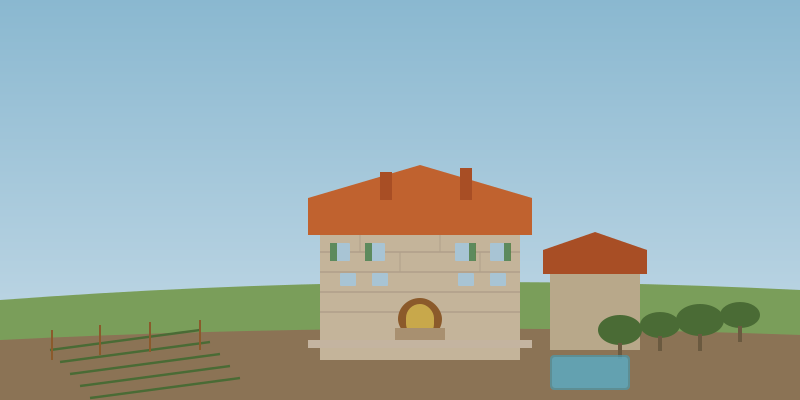
The word quinta simply means “farm” in Portuguese, but it has accumulated associations of a particular type of property: a working or formerly working agricultural estate with a main house, one or more outbuildings (typically an adega/wine cellar, storage barns, stable), and agricultural land ranging from less than a hectare to many hundreds.
A properly traditional quinta in central Portugal might include:
- Main farmhouse (casa principal) of 150–400m²
- Adega — the wine/olive oil cellar, often the oldest and most impressive building
- Palheiro — barn/hay storage
- Curral — animal enclosure
- Eira — the threshing floor (often a beautiful stone circle, now usually ornamental)
- Well (poço) or borehole (furo)
- Olive grove, vineyard, or mixed agricultural land
The charm of a quinta lies in this completeness — the sense of a self-sufficient agricultural operation, now (often) simplified, but retaining the architecture and infrastructure of centuries of farming.
Types of Rural Property in Central Portugal
Working quintas: Properties where some agricultural production continues — olive oil, wine, cork, cattle. These represent the highest-value rural properties in central Portugal. A working olive oil quinta near Coimbra with 5 hectares and a functional press might be €240,000 to €380,000. A wine estate in the Dão with established plantings might be €280,000 to €500,000.
Potential quintas: Former agricultural properties that have been partially or wholly taken out of production, but where the land, buildings and infrastructure remain. These offer the greatest opportunities for buyers who want to reinstate agricultural activity. Prices vary enormously with condition and location.
Agricultural land only (terreno agrícola): Bare land without buildings — olive groves, vineyards, orchards, cereal fields, irrigated market gardens. Prices range from €2,500/ha for unproductive marginal land to €15,000/ha for established, irrigated, productive land near urban areas.
Schist/granite rural houses with land: Village houses or isolated farmhouses with attached land — typically 0.3 to 2 hectares of mixed land (garden, orchard, olive trees, woodland). The house rather than the agricultural production is the main value here. Very common in the hill districts of Coimbra and Castelo Branco.
Legal Specificities of Agricultural Land
Agricultural land in Portugal is subject to several legal frameworks that differ from urban property. These are important to understand before making a purchase.
RAN (Reserva Agrícola Nacional): The National Agricultural Reserve is a designation that protects the most productive agricultural land from development. Land classified as RAN cannot normally be converted from agricultural use — no building of houses, no change of use. If you are buying agricultural land intending to build on it, your lawyer must verify the RAN classification. However, restoring or rebuilding on an existing agricultural building footprint on RAN land is generally permitted.
REN (Reserva Ecológica Nacional): The National Ecological Reserve covers ecologically sensitive areas — riverbanks, steep slopes, flood plains, coastal dunes. Like RAN, REN land is protected from development. Many attractive rural properties — particularly those near rivers or on hillsides — include some REN-classified land. This does not affect agricultural use but does restrict building.
Water rights (direitos de água): In Portugal, water rights are a distinct legal asset that may or may not be attached to a land title. Irrigation rights from a river, stream or canal are immensely valuable to agricultural land; the right to draw water from a well or borehole is also legally defined. Your lawyer must check water rights carefully in any agricultural property purchase.
Agricultural leasing (arrendamento rural): It is common for agricultural land in Portugal to be leased to tenant farmers, sometimes on long-established arrangements. Before completing on an agricultural property, establish whether any tenancy arrangements exist — these can be difficult to terminate.
Prédio rústico vs prédio urbano: In the Portuguese property register, buildings and land are categorised as either urban (prédio urbano — any habitable building) or rural/rustic (prédio rústico — agricultural land). A quinta typically comprises both a prédio urbano (the house and outbuildings) and a prédio rústico (the land). Both entries must be checked and both must transfer cleanly.
Assessing Agricultural Land
Before making a significant investment in agricultural land in central Portugal, the following assessments are important:
Soil type and productivity: The Mondego and Tagus valleys have deep alluvial soils of high fertility. The schist hills of Coimbra and Castelo Branco have thin, stony soils — productive for olives and cork oak, less so for irrigated crops. The granite soils of Viseu are excellent for vines.
Water availability: Portugal has persistent summer drought in the interior. Any serious agricultural operation depends on water — for irrigation, for animals, for processing. Assess boreholes (depth, yield), wells, streams and any connection to collective irrigation schemes (regadio).
Olive grove condition: Many central Portugal olive groves have been neglected — trees unpruned for years, weeds uncontrolled, harvests abandoned. A neglected olive grove can be brought back into production but requires 2 to 5 years of dedicated management. An agronomist can assess the condition and potential of an olive grove before purchase.
Vine condition: Established vines require annual management. Abandoned vineyards may have disease problems (particularly in wetter areas). The DOC classification of the land — whether it qualifies for Dão, Bairrada, Tejo or other appellations — is essential if you intend to produce wine commercially.
Cork oak (sobreiro): Cork oak groves are valuable but regulated. Cork can only be harvested every 9 years (the tree is not harmed). A property with mature cork oaks and an established harvesting cycle has a predictable, inflation-linked revenue stream. The ownership and harvesting rights of cork must be verified in the title.
Income from Rural Property
Many buyers ask about agricultural income potential from central Portugal rural properties. The honest answer is that for small quintas (under 10 hectares), agricultural income alone rarely covers the costs of ownership and maintenance — but it can contribute meaningfully.
Olive oil: A mature olive grove of 2 to 3 hectares in Coimbra or Castelo Branco district, properly managed and harvested, might produce 500 to 1,500 litres of extra-virgin olive oil per year. At a farm gate price of €6 to €9 per litre, this is €3,000 to €13,500 per year before harvest and processing costs. Profitable? Not enormously, but it covers property costs.
Wine: Small vineyards (under 1 hectare) producing grapes for home consumption or sale to a cooperative are not economically significant. For commercial wine production, you need 3 to 5 hectares minimum plus processing equipment or a cooperative relationship. It is a lifestyle business rather than an income-generating investment at the small scale.
Agritourism (Turismo Rural): This is where rural property income potential becomes genuinely interesting. Portuguese rural tourism law permits a range of accommodation and activity offerings from agricultural properties — Casas de Campo (country houses let to tourists), turismo de habitação (bed and breakfast style), Aldeamentos turísticos (small tourism villages). Planning permission is required, but the framework is established and the market is growing. A well-located quinta with restored accommodation and good online presence can generate €15,000 to €40,000 per year from short-term lets.
Cork: A property with 30 to 50 mature cork oaks on a 9-year harvest cycle generates income every 9 years rather than annually — not a cash-flow business, but a stored value. Cork harvest prices in central Portugal typically run €200 to €400 per tonne of cork.
Our Experience with Rural Property
We have handled dozens of quinta and agricultural property transactions in central Portugal since 2007. Some generalisations from that experience:
- The best quintas — those with good houses, well-maintained land, established production and attractive location — come to market infrequently and sell quickly when they do. If you have a specific brief, tell us and we will contact you when something matches.
- The most common mistake buyers make is underestimating the annual maintenance cost of agricultural land. Even if you are not farming it intensively, you must control vegetation, maintain boundary walls and water infrastructure, and manage any trees. Budget €2,000 to €6,000 per year for basic land management on 3 to 5 hectares.
- The best rural property purchases we have been involved in are those where the buyer had clarity about their primary use case — lifestyle home with agriculture as a secondary activity — rather than those who expected the agriculture to be economically self-sufficient from day one.
Agricultural property legal checklist: When buying a quinta or agricultural land in central Portugal, ensure your lawyer specifically checks: title for both prédio urbano and prédio rústico elements; RAN and REN classifications; water rights; any agricultural leases; property boundaries against the land register; and access rights (many rural properties have right-of-way issues that need to be resolved before purchase).
Price Guide: Rural Property in Central Portugal
| Property Type | Region | Price Range |
|---|---|---|
| Village house + 0.5 ha mixed land | Coimbra / Castelo Branco hills | €70,000 – €140,000 |
| Small quinta (1–2 ha), needs work | District-wide | €100,000 – €180,000 |
| Restored quinta (2–5 ha) | Coimbra, Viseu, Santarém | €200,000 – €380,000 |
| Working quinta with olive production | Coimbra, Castelo Branco, Santarém | €220,000 – €450,000 |
| Wine estate (3–8 ha, Dão DOC) | Viseu district | €280,000 – €520,000 |
| Equestrian property (house + stables) | Santarém / Ribatejo | €280,000 – €650,000 |
| Olive grove, bare land (per ha) | Interior central Portugal | €3,000 – €8,000/ha |
| Irrigated agricultural land (per ha) | River valleys, Mondego, Tagus | €7,000 – €14,000/ha |